
We compared leading Men'S T-Shirts using a structured product-data model and ranked the strongest matches from our current candidate pool.
Updated 8 月 14, 2026. Product order may change as catalog data changes.
Our Top 3

Hanes Mens Cotton
Recommended Pick
Brand: Hanes
- DESIGNED TO LAST – These men's t-shirt undershirts feature a tag-free design and lay-flat crewneck collar for added comfort. Made from high-qual…
- THE COMFORT OF COTTON – Exceptional softness against your skin that gets softer with each washing. (Heathers are a cotton/polyester blend.)
- CLASSIC FIT – This men’s t-shirt has a just-right standard fit, not too tight and not too loose. It’s designed to provide comfortable wear all d…

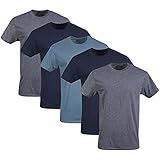
Gildan Men's Crew T-Shirts
Recommended Pick
Brand: Gildan
- Soft, breathable cotton
- Moisture wicking technology keeps you cool and dry
- Tag-free to prevent irritation
Gildan Men's Crew T-Shirts
Recommended Pick
Brand: Gildan
- Soft, breathable cotton
- Moisture wicking technology keeps you cool and dry
- Tag-free to prevent irritation

Hanes Men's Cotton Pocket T-Shirt
Recommended Pick
Brand: Hanes
- QUALITY FABRIC – Hanes' best men's pocket tee shirts are made of soft cotton that moves with you. (Heathered styles are a cotton-rich polyester…
- STAYS COOL – Cool Comfort moisture-wicking fabric wicks away moisture to keep you cool and comfortable in these classic crewneck t-shirts. Light…
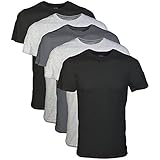
Gildan Men's Crew T-Shirts
Recommended Pick
Brand: Gildan
- Soft, breathable cotton
- Moisture wicking technology keeps you cool and dry
- Tag-free to prevent irritation
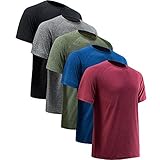
MCPORO Workout Shirts for Men Short Sleeve Quick Dry
Recommended Pick
Brand: MCPORO
- We combine soft, breathable and stretchy fabric with a functional and modern design to bring you men’s athletic wear t-shirts that will give you…
- The moisture-wicking short sleeve shirts provide you with the upper body support you need to push your limits while staying dry. Great for most…

Gildan Men's Crew T-Shirts
Recommended Pick
Brand: Gildan
- Soft, breathable cotton
- Moisture wicking technology keeps you cool and dry
- Tag-free to prevent irritation
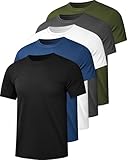
Kinglaman 5 Pack Men's Workout Gym Shirts Dry Fit
Recommended Pick
Brand: Kinglaman
- 【Moisture Wicking】- Dry fit t-shirts with quick drying properties to help you get rid of the sweat during exercise and keep dry all the time.
- 【Athletic Tees Design】- Active t shirts for men with crew neck and short sleeve will make your excercise more comfortable. Using mesh stretch fa…
- 【High Performance Activewear】- Our sport tshirt is practical whether at home or in the gym, perfect for hiking, fitness, cycling, training, tenn…

5 Pack Men's Dry Fit T Shirts Athletic Running
Recommended Pick
Brand: 5
- Moisture wicking fabric is quick-dry & ultra-soft, keeps you cool and dry anytime.4-way stretchy material for excellent flexibility enhances the…
- Athletic crew neck & short sleeves, Perfect for running, workout and training sports and even as an moisture wicking undershirt.
- Ideal for cooler days, but still very comfortable to wear in summer. Safeguards your skin from harmful Ultraviolet Rays.
The best men's t-shirts should solve a clear practical need while remaining comfortable and manageable over repeated use. That requires attention to fabric, measurements, cut, stretch, construction, care, comfort, and wardrobe use.
The sections below turn the category into a practical checklist. They help separate useful specifications from promotional language and reduce the chance of selecting an option that looks suitable but performs poorly in daily use.
Product Picks to Compare
The product picks below cover different approaches to men's t-shirts. Compare them with the fit, construction, and use-case criteria in this guide rather than choosing from position alone.
Quick Decision Framework
| Priority | What to verify | Warning sign |
|---|---|---|
| Fit and usability | Garment measurements; Fabric composition | Missing measurements or vague universal-fit wording |
| Construction | Cut and ease; Stretch and recovery | Decorative claims without close-up details |
| Ownership | Comfort; Care and versatility; care requirements | Repeated early failure at the same stress point |
What Matters Most Before You Buy
Focus on the details that change how the product performs in normal use. Measurements, materials, construction, comfort, organization, weather suitability, and maintenance matter more than decorative extras or broad claims.
The page is intentionally focused on a specific use case. Compare the specification that defines that use case with normal fit, comfort, care, and durability rather than assuming the modifier alone guarantees a better product.
Garment measurements
Compare chest, waist, hip, rise, inseam, sleeve, or length as relevant.
This factor should be judged against the expected frequency of use. A feature that is valuable every day may add unnecessary cost, weight, or care for occasional ownership.
Fabric composition
Natural and synthetic fibers differ in drape, warmth, stretch, drying, and care.
Recent owner feedback is useful when the same issue appears repeatedly for the exact size, material, or variation. One isolated comment should not outweigh consistent specifications.
Cut and ease
Slim, regular, relaxed, oversized, tapered, and straight cuts distribute room differently.
This factor should be judged against the expected frequency of use. A feature that is valuable every day may add unnecessary cost, weight, or care for occasional ownership.
Stretch and recovery
Elastic fibers improve movement but may lose recovery under heat and wear.
This factor should be judged against the expected frequency of use. A feature that is valuable every day may add unnecessary cost, weight, or care for occasional ownership.
Seams and construction
Stress points, hems, lining, buttons, and zippers influence durability.
This factor should be judged against the expected frequency of use. A feature that is valuable every day may add unnecessary cost, weight, or care for occasional ownership.
Comfort
Weight, texture, breathability, and pressure areas affect long wear.
Look for a measurement, construction image, or clearly stated material. Broad wording without a specific detail makes meaningful comparison difficult.
Care and versatility
Cleaning requirements and outfit compatibility determine repeat use.
Recent owner feedback is useful when the same issue appears repeatedly for the exact size, material, or variation. One isolated comment should not outweigh consistent specifications.
Choose According to the Use Case
Daily wear
Comfort and easy care support frequent use.
Work
Fit, opacity, structure, and wrinkle control matter.
Travel
Packability, layering, and quick drying improve flexibility.
Seasonal use
Fabric weight and layering should match climate.
Fit, Dimensions, and Real-World Handling
Use garment measurements rather than relying only on a letter size. Compare with a similar item that fits well and account for intended layering.
Before ordering, compare the listing with an item that already works well. Note exterior and usable measurements, weight, adjustment range, and fixed components. Model photographs can distort scale, especially when body proportions or camera distance are unknown.
Materials, Care, and Service Life
Follow the fiber label, close fasteners, separate colors, reshape when needed, and avoid heat that damages stretch or coatings.
Service life depends on use frequency, load, weather, cleaning, storage, and the quality of high-stress components. Inspect attachment points and moving parts periodically so a small problem can be addressed before it becomes structural damage.
Budget and Value
Value is the relationship between price, usable features, comfort, and expected frequency. A simpler product can be sensible for occasional use, while repeated weekly use may justify stronger materials, easier care, or more accurate sizing.
A low initial price does not always create low ownership cost. Replacement frequency, cleaning requirements, accessories, repair options, and return shipping can change the real value.
Listing Details to Verify
Confirm the seller, return window, warranty, and included pieces before ordering. Packaging photographs and product titles do not always show what is supplied.
Confirm the seller, return window, warranty, and included pieces before ordering. Packaging photographs and product titles do not always show what is supplied.
Common Buying Mistakes
- Ordering by usual size without checking measurements.
- Ignoring fabric composition.
- Choosing a fitted cut without movement allowance.
- Assuming every color uses identical fabric.
- Using high heat on stretch materials.
Frequently Asked Questions
How can online clothing fit be checked?
Compare garment measurements with a similar item rather than body size alone.
Does fabric stretch change fit?
Yes. Stretch percentage and recovery affect movement and shape retention.
Should clothing be sized up?
Only when the cut, layering, and measurement chart support it.
Which fabric is easy to travel with?
Wrinkle-resistant, quick-drying blends are practical, subject to comfort.
How can shrinkage be reduced?
Follow the wash temperature and drying instructions.
What indicates good construction?
Even seams, reinforced stress points, secure closures, and clean finishing.
Related Buying Guides
How to Compare Similar Listings
Compare clothing with garment measurements from a similar item that already fits. Body-size charts and letter sizes do not reveal the finished chest, waist, hip, rise, inseam, sleeve, or garment length. Check whether the selected color has the same fabric composition, lining, stretch percentage, and care instructions, because variations can differ within one listing.
Construction details become more important with frequent wear. Review seam alignment, stress-point reinforcement, zipper and button attachment, hem finishing, opacity, fabric recovery, and shrinkage feedback. A garment that requires difficult care or constant adjustment may provide less value than a simpler style that fits the intended routine and layers comfortably.
Who May Need a Different Option
A different cut or specialist range may be needed when standard proportions repeatedly fail at the shoulders, torso, rise, inseam, mobility area, or adaptive closure. Petite, tall, maternity, adaptive, plus-size, or occupational ranges often change pattern proportions rather than simply scaling the same garment.
Returns, Replacement, and Long-Term Use
Return clothing when the garment measurements, fabric, opacity, or construction differ substantially from the listing, or when the fit prevents normal movement. Replace or repair it when stress seams open, closures fail, elastic loses recovery, protective coatings peel, or fabric damage can no longer be corrected safely.
Final Checklist
- The page focus matches the intended purchase: men's t-shirts.
- Measurements and adjustment ranges have been checked.
- Materials and construction suit the expected frequency and conditions.
- Comfort and handling have been considered after loading or extended wear.
- Recent feedback refers to the selected variation.
- Return terms, warranty, and included pieces have been verified.
One-Minute Purchase Check
Before completing the order, reopen the selected variation and confirm the size, color, material, quantity, seller, delivery date, and return window. Compare the written measurements with an item you already own, then review the most recent feedback for that exact option. Check whether accessories, batteries, cases, straps, liners, inserts, tools, or replacement parts shown in photographs are actually included. This final check takes little time and catches many avoidable problems involving the wrong variation, incomplete packaging, unsuitable dimensions, or misunderstood care requirements.
Final Thoughts
A useful purchase is the one that fits the person, task, and maintenance routine. Clear specifications and appropriate construction matter more than a crowded feature list.
A Practical Decision Framework
The strongest Men'S T-Shirts choice is the one that meets your non-negotiable requirements without making you pay for features you will rarely use. Use the steps below after reviewing the compared products. They create a consistent comparison and prevent a familiar brand, a temporary discount, or one impressive specification from dominating the entire decision.
Define the job before comparing products
Write down where the product will be used, who will use it, how often it will be used, and what a successful purchase must accomplish. Convert that description into three must-have requirements and two preferences. A must-have should be measurable whenever possible, such as a size limit, compatibility requirement, material, capacity, fit, or essential function. Preferences can include color, secondary features, or convenience extras. Reject a candidate that misses a true must-have even when its overall score is attractive.
Compare the same evidence for every finalist
Product pages do not always present information in the same order, so compare finalists with one side-by-side checklist. Record the exact model or variation, dimensions, included accessories, core materials, stated performance, care needs, warranty information, and return conditions. Mark a detail as unverified when it is missing instead of assuming it matches another version. A consistent checklist makes trade-offs visible and reduces the chance of choosing a product because its listing is more persuasive rather than because the product is a better fit.
Check fit, compatibility, and everyday friction
Many disappointing purchases perform their main function but create small problems every day. Confirm physical fit, device or system compatibility, installation needs, storage space, cleaning requirements, controls, charging or power needs, and whether replacement parts are easy to obtain. Consider the least experienced person who may use the product. A simpler option can be the better choice when it is easier to set up, maintain, carry, adjust, or use reliably in the intended environment.
Judge value across the ownership period
Purchase price is only one part of value. Include required accessories, consumables, maintenance, replacement components, and the likely cost of replacing an unsuitable product. A premium feature is worthwhile when it solves a frequent problem, saves meaningful time, or improves safety, comfort, or durability. It is poor value when it duplicates something you already own or addresses a situation that will rarely occur. Compare the best-fit option with the lowest acceptable option and identify exactly what the additional spending buys.
Verify the live offer before ordering
Amazon listings, variations, sellers, prices, coupons, delivery estimates, and included items can change after a guide is updated. Open the exact product link and verify that the selected size, color, configuration, or pack count matches the version discussed here. Review the current seller, fulfillment method, return window, warranty terms, and delivery date. Save the order details when a specification or included accessory is essential, especially when several variations share one product page.