
We compared leading Safety Shoes using a structured product-data model and ranked the strongest matches from our current candidate pool.
Updated 8 月 14, 2026. Product order may change as catalog data changes.
Our Top 3

Skechers Men's Cankton Steel Toe Construction Shoe
Recommended Pick
Brand: Skechers
- Steel safety toe meets ASTM F2413 impact and compression standards for work boots for men, plus Electrical Hazard (EH) safe design protection
- Memory Foam cushioned insole and roomy Relaxed Fit design make these work shoes for men perfect for long shifts
- High-abrasion duraleather upper with mesh panels provides durability and breathability in these non slip work shoes for men

Steel Toe Shoes for Men Women
Recommended Pick
Brand: Steel
- 【High Standard Safety Shoes】: Our steel toe shoes for women can efficiently protect your feet from accidentally falling or rolling objects. Mean…
- 【Lightweight and Comfortable】: These womens steel toe shoes are fairly lightweight and comfortable. Each shoe weighs less than 1 pound, which ca…
- 【Puncture-proof Kevlar Midsole】: High density kevlar midsole provides strong protection for your feet from being punctured by nails, glasses, or…

Timberland PRO Men's Intercept Steel Safety Toe
Recommended Pick
Brand: Timberland
- Timberland PRO 24/7 Comfort System: A unique comfort system that meets the most rigorous worksite demands- 24 hours a day, 7 days a week- the Ti…
- Timberland PRO FLEX : Technology gives you full range of motion without resistance and has features like anatomically positioned flex grooves un…
- Steel Safety Toe: Metallic, asymmetrical-shaped toe cap that meets US safety standards including ASTM F2412-18a and ASTM F2413-18 I and C impact…

Steel Toe Shoes for Men and Women Comfortable Lightweight
Recommended Pick
Brand: Steel
- 【SLIP RESISTANT OUTSOLE】The slip resistance work utility shoes are designed with anti-skid soles, which will enhance slip resistance and shock a…
- 【PUNCTURE PROOF MIDSOLE】The safety work shoes with a puncture-proof Kevlar midsole can protect your feet safe while there are sharp objects like…

Steel Toe Shoes for Men Women Slip On Safety
Recommended Pick
Brand: Steel
- 【Cushioned MD Sole & Breathable Upper】These steel toe tennis shoes use our latest advanced design to provide the most suitable cushioning.So you…
- 【Indestructible Shoes With Steel Toe Cap】The Furuian safety shoes use the European standard steel cap that goes beyond ASTM F2413-18 standard, s…
- 【Memory Foam Insole & Puncture-proof Midsole】Memory foam insole with arch support, give you a comfortable for all day wear.Puncture-resistant mi…

Tinefiy Steel Toe Shoes for Women Comfortable Safety Work
Recommended Pick
Brand: Tinefiy
- Puncture Proof: These steel toe shoes for women with puncture-resistant fiber midsole provides puncture resistance of 1100N, saved your foot fro…
- Cushioned Sole: The womens steel toe shoe features a cushioned outsole to reduce the fatigue of your feet at work and keep your feet comfortable…

Furuian Steel Toe Boots for Men Women Lightweight Work
Recommended Pick
Brand: Furuian
- Safety First: Insulated with European standard ASTM F2413-18 steel toe cap, our work boots aim to provide first class standard protection for cu…
- Puncture Resistant: These steel toe wedge boots are elaboratly made with multi layer sole. The anti-puncture midsole protect you from any accide…
- Slip Resistant Design: Considering daily usage, Furuian steel toe safety footwear designed series of slip resistant pattern, make sure your step…

Hogent Steel Toe Shoes for Men
Recommended Pick
Brand: Hogent
- 【Safety-First Protection】: Hogent steel toe shoes for men use European standard steel toe that can resist 200J impact or 15010N pressure, gives…
- 【Anti-Puncture Midsole】: The midsole of the work sneakers for men is made of 4.0mm KEVLAR, The removable memory foam insole offering 1410N punct…
- 【Breathable & Comfortable】: Comfortable work shoes for women is made of mesh fabric with tear resistance up to 70N provide excellent air permeab…
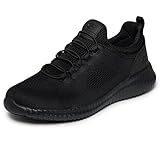
Skechers Men's Work Cessnock Food Service Shoe
Recommended Pick
Brand: Skechers
- Slip-resistant rated outsole provides superior traction on wet, dry, and oily surfaces, with tested electrical hazard protection for added workp…
- Relaxed Fit design ensures a roomy, comfortable fit while Air-Cooled Memory Foam cushioned insole delivers responsive support for work shoes for…
- Flexible lightweight shock-absorbing midsole paired with Skech-Knit mesh upper creates non slip work shoes for men built to last
The best safety shoes are not simply the largest, lightest, warmest, or most decorative options. A dependable choice brings together required safety standard, fit, protection, traction, visibility, durability, comfort, and care for the intended routine.
The sections below turn the category into a practical checklist. They help separate useful specifications from promotional language and reduce the chance of selecting an option that looks suitable but performs poorly in daily use.
Product Picks to Compare
The selection below presents several current approaches to the category. Read the detailed buying factors afterward so the final choice reflects actual use rather than presentation alone.
Quick Decision Framework
| Priority | What to verify | Warning sign |
|---|---|---|
| Fit and usability | Required standard; Fit and movement | Missing measurements or vague universal-fit wording |
| Construction | Protection type; Materials | Decorative claims without close-up details |
| Ownership | Comfort; Inspection and care; care requirements | Repeated early failure at the same stress point |
What Matters Most Before You Buy
Focus on the details that change how the product performs in normal use. Measurements, materials, construction, comfort, organization, weather suitability, and maintenance matter more than decorative extras or broad claims.
Work-focused products must meet the actual hazard and workplace requirement. Certification, task fit, inspection, and replacement rules take priority over styling.
Required standard
Start with the workplace, employer, or regulatory requirement before style or price.
This factor should be judged against the expected frequency of use. A feature that is valuable every day may add unnecessary cost, weight, or care for occasional ownership.
Fit and movement
Protective items must allow the task without slipping, binding, or creating new hazards.
Recent owner feedback is useful when the same issue appears repeatedly for the exact size, material, or variation. One isolated comment should not outweigh consistent specifications.
Protection type
Impact, compression, cut, puncture, slip, chemical, visibility, and weather protection are different.
This factor should be judged against the expected frequency of use. A feature that is valuable every day may add unnecessary cost, weight, or care for occasional ownership.
Materials
Leather, textiles, rubber, composites, reflective trim, and coatings suit different hazards.
Look for a measurement, construction image, or clearly stated material. Broad wording without a specific detail makes meaningful comparison difficult.
Durability
Reinforced stress points and replaceable components improve service life.
Recent owner feedback is useful when the same issue appears repeatedly for the exact size, material, or variation. One isolated comment should not outweigh consistent specifications.
Comfort
Weight, breathability, cushioning, and pressure areas affect compliance during long shifts.
This factor should be judged against the expected frequency of use. A feature that is valuable every day may add unnecessary cost, weight, or care for occasional ownership.
Inspection and care
Protective performance can decline with damage, contamination, or wear.
Look for a measurement, construction image, or clearly stated material. Broad wording without a specific detail makes meaningful comparison difficult.
Choose According to the Use Case
Construction
Jobsite rules and task hazards lead the choice.
Warehouse or service work
Slip control, movement, and long-shift comfort matter.
Roadside or low-light work
Visibility and weather protection become important.
Healthcare or cleaning
Fluid resistance, washability, and controlled traction may be required.
Fit, Dimensions, and Real-World Handling
Use task-specific sizing and wear the normal work layers or socks during fitting. Protective coverage should remain in place throughout movement.
Before ordering, compare the listing with an item that already works well. Note exterior and usable measurements, weight, adjustment range, and fixed components. Model photographs can distort scale, especially when body proportions or camera distance are unknown.
Materials, Care, and Service Life
Inspect before use, clean contamination according to the material, dry fully, and replace items when protective components are damaged or expired.
Service life depends on use frequency, load, weather, cleaning, storage, and the quality of high-stress components. Inspect attachment points and moving parts periodically so a small problem can be addressed before it becomes structural damage.
Budget and Value
A low initial price does not always create low ownership cost. Replacement frequency, cleaning requirements, accessories, repair options, and return shipping can change the real value.
A low initial price does not always create low ownership cost. Replacement frequency, cleaning requirements, accessories, repair options, and return shipping can change the real value.
Listing Details to Verify
Confirm the seller, return window, warranty, and included pieces before ordering. Packaging photographs and product titles do not always show what is supplied.
Check the exact variation selected because marketplace listings can combine several sizes, colors, materials, or generations under one review profile. The written specification and recent feedback should refer to the same option.
Common Buying Mistakes
- Choosing appearance before the required standard.
- Assuming one product covers every hazard.
- Using damaged protective equipment.
- Ignoring long-shift comfort.
- Modifying safety components.
Frequently Asked Questions
How are safety standards chosen?
Use employer, industry, and regulatory requirements for the task.
Can protective gear be used after damage?
Damage can reduce performance and may require immediate replacement.
Does slip-resistant mean slip-proof?
No. Surface contamination, tread wear, and movement still affect traction.
How should workwear fit?
Securely enough to stay protective while allowing required movement.
When should protective items be replaced?
Follow inspection criteria, wear indicators, expiration guidance, and workplace rules.
Can ordinary clothing replace workwear?
Not when a certified or specified protective standard is required.
Related Buying Guides
How to Compare Similar Listings
Compare workwear by the exact workplace requirement before considering comfort extras or appearance. Certification, toe protection, visibility class, slip test, cut level, puncture resistance, fluid barrier, or other standards apply to specific hazards. Confirm that the selected size and variation carries the required marking rather than assuming every option on the listing is identical.
Long-shift usability still matters because uncomfortable equipment is less likely to remain correctly positioned. Compare weight, breathability, flex points, pressure areas, grip, pocket placement, and compatibility with other protective equipment. Review the inspection and replacement rules, since damaged or contaminated protective components may no longer provide their stated performance.
Who May Need a Different Option
Choose a different certified product whenever the listed standard does not match the hazard, the item interferes with other protective equipment, or damage prevents correct positioning. Comfort modifications should never remove, cut, drill, or alter a protective component unless the manufacturer and workplace procedure explicitly permit it.
Returns, Replacement, and Long-Term Use
Return workwear that lacks the required marking, cannot remain correctly positioned, or interferes with the task. Remove it from service when inspection reveals cracks, cuts, compression, contamination, worn tread, faded visibility material, failed closures, or other damage identified by the manufacturer or workplace procedure.
Final Checklist
- The page focus matches the intended purchase: safety shoes.
- Measurements and adjustment ranges have been checked.
- Materials and construction suit the expected frequency and conditions.
- Comfort and handling have been considered after loading or extended wear.
- Recent feedback refers to the selected variation.
- Return terms, warranty, and included pieces have been verified.
One-Minute Purchase Check
Before completing the order, reopen the selected variation and confirm the size, color, material, quantity, seller, delivery date, and return window. Compare the written measurements with an item you already own, then review the most recent feedback for that exact option. Check whether accessories, batteries, cases, straps, liners, inserts, tools, or replacement parts shown in photographs are actually included. This final check takes little time and catches many avoidable problems involving the wrong variation, incomplete packaging, unsuitable dimensions, or misunderstood care requirements.
Final Thoughts
A useful purchase is the one that fits the person, task, and maintenance routine. Clear specifications and appropriate construction matter more than a crowded feature list.
A Practical Decision Framework
The strongest Safety Shoes choice is the one that meets your non-negotiable requirements without making you pay for features you will rarely use. Use the steps below after reviewing the compared products. They create a consistent comparison and prevent a familiar brand, a temporary discount, or one impressive specification from dominating the entire decision.
Define the job before comparing products
Write down where the product will be used, who will use it, how often it will be used, and what a successful purchase must accomplish. Convert that description into three must-have requirements and two preferences. A must-have should be measurable whenever possible, such as a size limit, compatibility requirement, material, capacity, fit, or essential function. Preferences can include color, secondary features, or convenience extras. Reject a candidate that misses a true must-have even when its overall score is attractive.
Compare the same evidence for every finalist
Product pages do not always present information in the same order, so compare finalists with one side-by-side checklist. Record the exact model or variation, dimensions, included accessories, core materials, stated performance, care needs, warranty information, and return conditions. Mark a detail as unverified when it is missing instead of assuming it matches another version. A consistent checklist makes trade-offs visible and reduces the chance of choosing a product because its listing is more persuasive rather than because the product is a better fit.
Check fit, compatibility, and everyday friction
Many disappointing purchases perform their main function but create small problems every day. Confirm physical fit, device or system compatibility, installation needs, storage space, cleaning requirements, controls, charging or power needs, and whether replacement parts are easy to obtain. Consider the least experienced person who may use the product. A simpler option can be the better choice when it is easier to set up, maintain, carry, adjust, or use reliably in the intended environment.
Judge value across the ownership period
Purchase price is only one part of value. Include required accessories, consumables, maintenance, replacement components, and the likely cost of replacing an unsuitable product. A premium feature is worthwhile when it solves a frequent problem, saves meaningful time, or improves safety, comfort, or durability. It is poor value when it duplicates something you already own or addresses a situation that will rarely occur. Compare the best-fit option with the lowest acceptable option and identify exactly what the additional spending buys.
Verify the live offer before ordering
Amazon listings, variations, sellers, prices, coupons, delivery estimates, and included items can change after a guide is updated. Open the exact product link and verify that the selected size, color, configuration, or pack count matches the version discussed here. Review the current seller, fulfillment method, return window, warranty terms, and delivery date. Save the order details when a specification or included accessory is essential, especially when several variations share one product page.